“Digital platforms like uBIQUity can help foster the dialogue between the physical and digital world.”
Bible scholar Laura Bigoni has been working on the ITSERR service uBIQUity. “It is an innovative tool providing a new way to understand religious texts and fostering interreligious dialogue by bringing together Quran and Bible scholars.”
Laura Bigoni (University of Fribourg in Switzerland) is a Bible scholar. She especially works the Old Testament and its translations from Hebrew into Greek from the Hellenistic time. It is an interdisciplinary field of research, focusing on the Bible and on translations. She is a member of the ITSERR team that is developing the tool uBIQUity. In this interview, she tells us more about it.
uBIQUity
“The name “uBIQUity” is referring to “BI” from Bible and “QU” from Qur’an. It studies how the Bible and the Quran appear in ancient commentaries and writings.
It’s a search engine where you can look up any word or quote in Latin, Greek, or Arabic. It shows you where the text appears and lets you compare different works and/or versions side by side. The innovative part is that it uses semantic search, so it can find texts that are similar in meaning, not just exact matches. This helps you discover connections between texts that were hard to see before, especially because many of these materials have never been available digitally. The main idea is to have a digital tool that can find similar sentences and similar texts in sacred books and the works of the people who read and commented on them. This helps researchers to see how widely these texts were used and how they influenced their tradition.
Innovative
What makes this also innovative is that, for the first time, we can digitally explore the many different versions and traditions behind the Bible. Normally, when you visit a website, you see only one fixed version of the Bible. However, in reality, the Bible has a long history with many variations. uBIQUity brings all these materials together in one digital place, giving researchers a new way to understand these texts and their heritage.
How does it help you in your research?
I’ve been working for a while on Septuagint lexicography, and I am interested in the history of words that are used in the Bible. uBIQUity supports me looking for similar words or similar contexts in which a single word was used by later authors. I may know a lot of how a word is used within the Bible, but then with this tool, I can go further and enlarge my picture and find different ways that I’ve never thought about or different authors that I don’t know. The interface is very friendly: You can go there and actually select an area or a time period of interest and be very specific about what you are looking for. Or you can just say: Let me know everything you know about… Then it becomes larger and broader, so it really opens up research opportunities.
Fostering Dialogue
What I have been doing in the last years is getting closer to the digital world as well. Digital platforms like uBIQuity can help foster the dialogue between the physical and digital world and between different disciplines. People are normally used to just working on their own studying one version of a source, but the platform can foster dialogue between different expertise.
It is becoming increasingly important nowadays to see the Bible in different versions, because obviously this also fosters interreligious dialogue. The tool is bringing together Quran scholars and Bible scholars, and it is probably the first time that they can collaborate on such a scale, working together on a shared platform. That’s really meaningful!”
***
Note: uBIQUity is currently being developed by the Italian project ITSERR and in its final stage. If everything goes as envisioned, the tool will be made available to the research community through the future RESILIENCE portal.
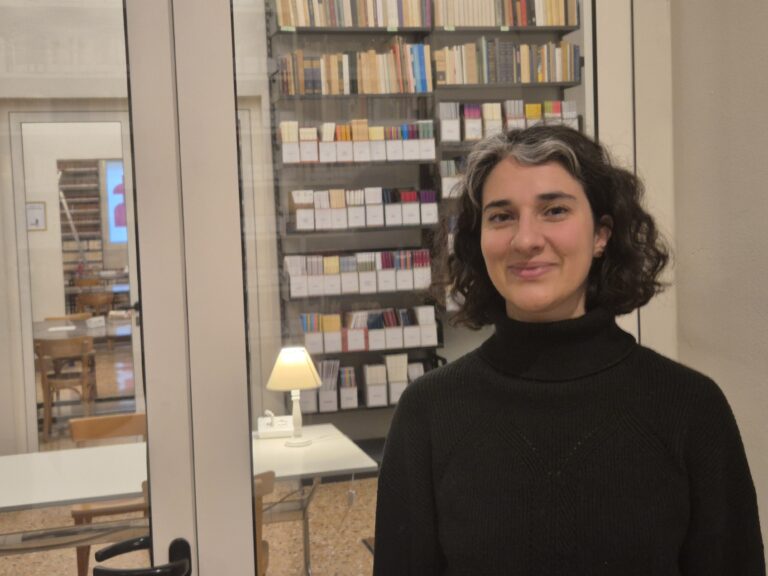
Laura Bigoni
University of Fribourg in Switzerland
Discover what's possible and become part of Europe's growing research network
View services