“The Gazi Husrev-Bey library is a gem for anyone studying religion in Southeastern Europe.”
In this interview, we speak with Đermana Kurić, Research Associate at the University of Galway and PhD candidate at the University of Sarajevo, whose work focuses on Islam and Muslims in Europe, gendered Islamophobia, and the history of Muslim women in the Balkans. Kuric regularly conducts research at the Gazi Husrev‑bey Library – one of Southeastern Europe’s most significant cultural and scholarly institutions.
Đermana, could you introduce yourself and your academic background?
My name is Đermana Kurić, and I am currently part of the ERC‑funded BILQIS project at the University of Galway, which examines Muslim women’s access to justice in Europe. I am Bosnian, and my research interests revolve around Islam and Muslims in Europe, Islamophobia, gender, Muslim women, and state–religion relations. My academic path spans English language and literature, comparative religious studies, and currently sociology, as I complete my PhD at the University of Sarajevo.
You conducted extensive research at the Gazi Husrev‑bey Library in Sarajevo. What makes this library so distinctive?
To begin with, it is an extraordinarily beautiful building, situated in the heart of Sarajevo’s old town. Founded in 1537, it is the oldest library of its kind in this part of the world. Its collections are impressive: manuscripts in Arabic, Turkish, Persian, and Bosnian; rich holdings of books and periodicals; Ottoman archival materials; and the archive of the Islamic Community of Bosnia and Herzegovina. But beyond its digital and physical collections, the library provides an environment that genuinely supports academic work—excellent reading rooms, strong infrastructure, and a location that allows scholars to step out into Sarajevo’s vibrant historical centre.
Is the library essential for scholars studying Islam in the region?
Absolutely. Researchers in Islamic studies, religious studies, sociology, history, anthropology, and political science all stand to benefit. The library brings together materials that are unavailable elsewhere—partly because some archives in Bosnia were tragically destroyed during the 1990s war. Gazi Husrev‑bey Library now preserves collections that would otherwise have vanished.
How do digital and physical resources complement your research?
Digitalization has transformed my work. Periodicals from the early 20th century, for example, can be searched by keyword or date, making archival work far more efficient. Instead of manually paging through fragile volumes, I can quickly locate themes, references, or recurring discussions, which significantly accelerates the analytical phase of my work. Being physically present in the library also allows me to request materials that are not – and often cannot be – digitized, especially manuscripts, delicate archival items, or institutional records. These materials often require in‑person handling under the supervision of professional staff, who themselves are an important resource: they offer guidance, historical context, and insights into the organization of the collections.
In short, the digital infrastructure maximizes efficiency and breadth of access, while the physical environment fosters depth, focus, and scholarly interaction. Together they create a research ecosystem that supports both the analytical and the human dimensions of academic work – something that, for me, has been essential.
Could you give an example of how the library enabled discoveries you could not have made elsewhere?
Certainly. For one field of my research, I examined Muslim periodicals before int he first half of the 20th century to study representations of Muslim women. These materials were indispensable. Another example comes from my work on socialist Yugoslavia’s 1950s ban on face veiling: only the Gazi Husrev‑bey Library holds the institutional archive of the Islamic Community, which was essential for understanding its responses.
Why should the library be included in the RESILIENCE’s future services catalogue?
Because it is a treasure: over 100.000 items, multiple languages, diverse archives, and a uniquely rich blend of European, Ottoman, and Bosnian heritage. Scholars gain not only access to resources but also a to vibrant network of researchers who come from across the world. For anyone studying religion in Southeastern Europe, this library is indispensable.
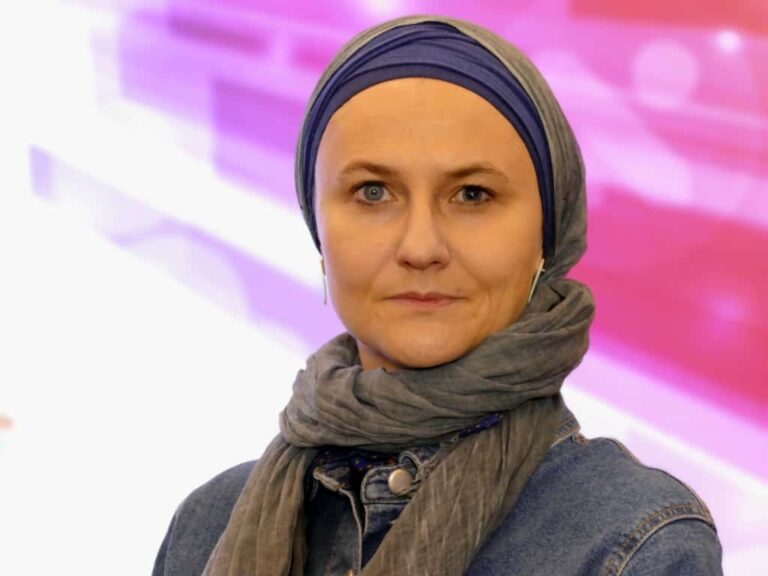
Đermana Kurić
Research Associate at the University of Galway and PhD candidate at the University of Sarajevo
Discover what's possible and become part of Europe's growing research network
View services